
Case Study versus Business Case
Which one is better?


What is the difference between a case study and a business case? Which one is better for value selling?
If you feel these questions are trivial, here’s why you should reconsider.
Value selling is the technique of convincing customers that your product/service delivers superior value compared to what they are doing now. Customers want proof of value. No proof, no sale. It’s that simple.
A case study is a form of proof. So is a business case. Again, what’s the difference and which one is better?
Another reason to care
Recently, Mark Stiving of Impact Pricing posed this question on LinkedIn: how many sales deals are lost to no purchase (no-decision)?
Fortunately, I know the answer. It’s 40-60% based on a recent Harvard Business Review article. When I was at LeveragePoint, our President/CMO at the time, Dick Orlando, would quote this statistic frequently.
Think about the implications of that for a moment. Deals often get lost NOT because of your price but because your customer simply DOES NOT believe that your product is worth buying.
Discounts won’t fix this problem. Even FREE doesn’t work here. Have you ever seen a prospect decline a free pilot?
Both case studies and business cases are effective tools for advancing a value selling opportunity. They differ in how they are created and how they are used.
The Case Study
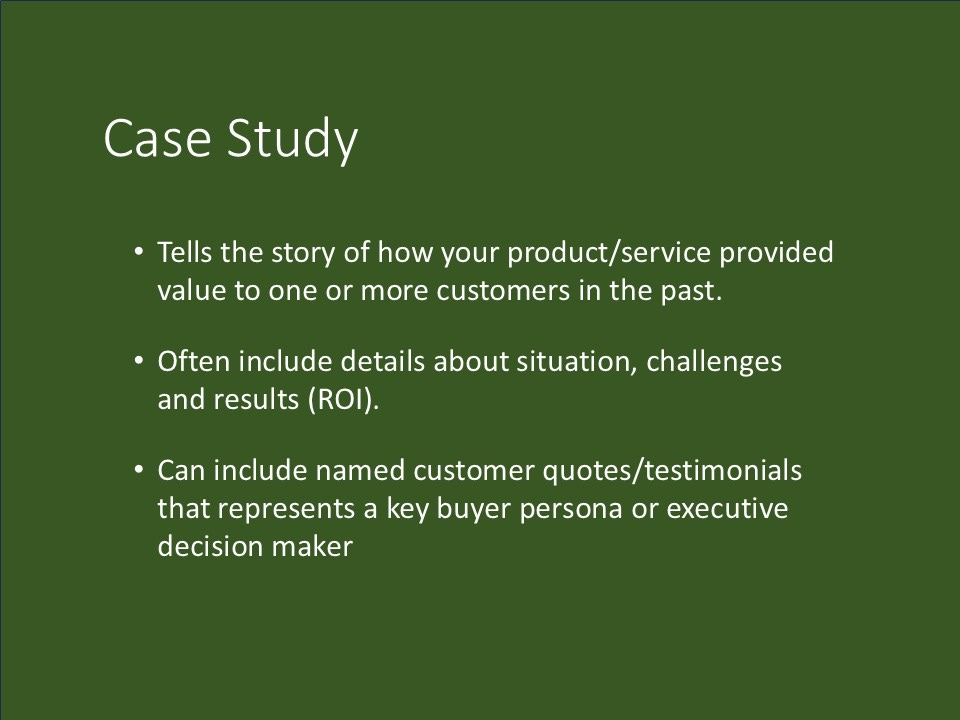
First up case studies. We’ve all seen them. These vary from 1-pager quals to in-depth published research papers. For example when I was at Forrester Research, clients bought Total Economic Impact (TEI) studies. These provided detailed customer value estimates based on multiple customer experiences.
Sales people like them because they require minimal effort, just email out to prospects who request “proof-points.” Or even easier, prospects can just download them from the seller’s website. A busy product marketing team may generate multiple versions of case studies according to industry vertical and/or use case.
The Business Case
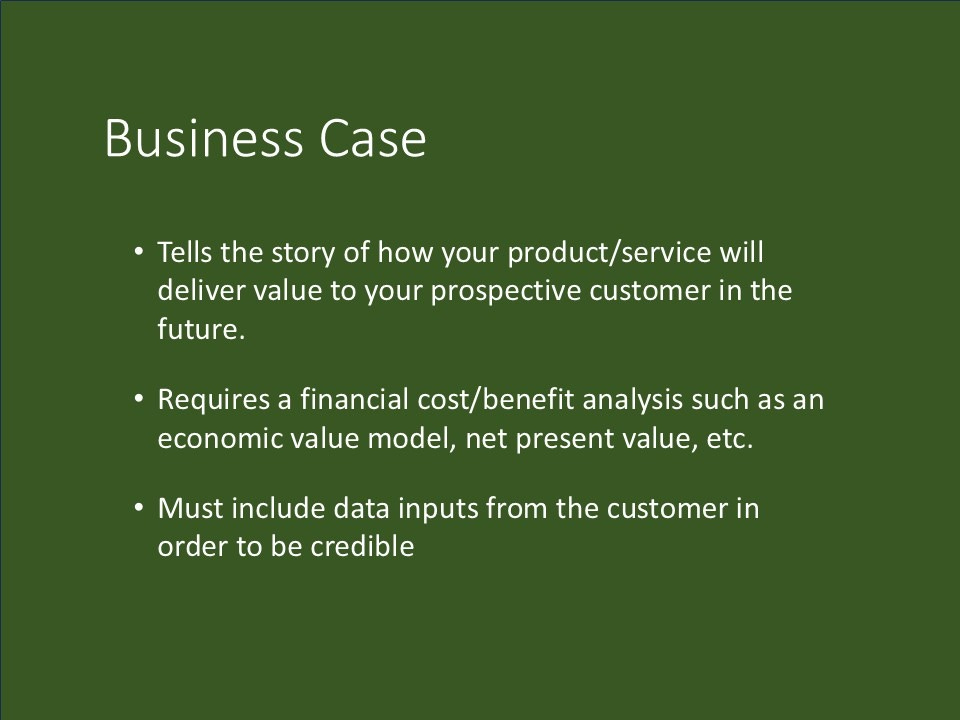
Business cases are less common because they are custom-made for a particular customer. You won’t find them by doing a Google Search (at least not yet).
Back in the day, a business case was reserved for big capital expenditure projects because of the time and effort. They required a level of financial skill. My first post MBA consulting job involved creating giant NPV spreadsheets for telecommunications clients.
Later, the cost and expertise required for building these value-based business cases came down significantly with the introduction of value management platform tools like LeveragePoint, Ecosystems and Cuvama. In addition, these and other AI-native tools are radically making the task even easier. I have seen multiple demos of such tools creating a business case within minutes. So the Google Search version is probably a lot closer than we think.
However, even with all that AI-tailwind behind it, I still find that sales people have less appetite for business cases. One, it still takes more time and effort than case studies and two, they are often shy around having financial conversations with customers.
For more on this topic, see:


My Recommendation
Use both, if you can afford it.
Case Studies are effective sales collateral for introducing your product/service to prospective customers who are unfamiliar with your company. My caveat is that they should be well written and relatively recent. Success here depends on the skill of your product marketing team and/or a budget for commissioning a third-party resource.
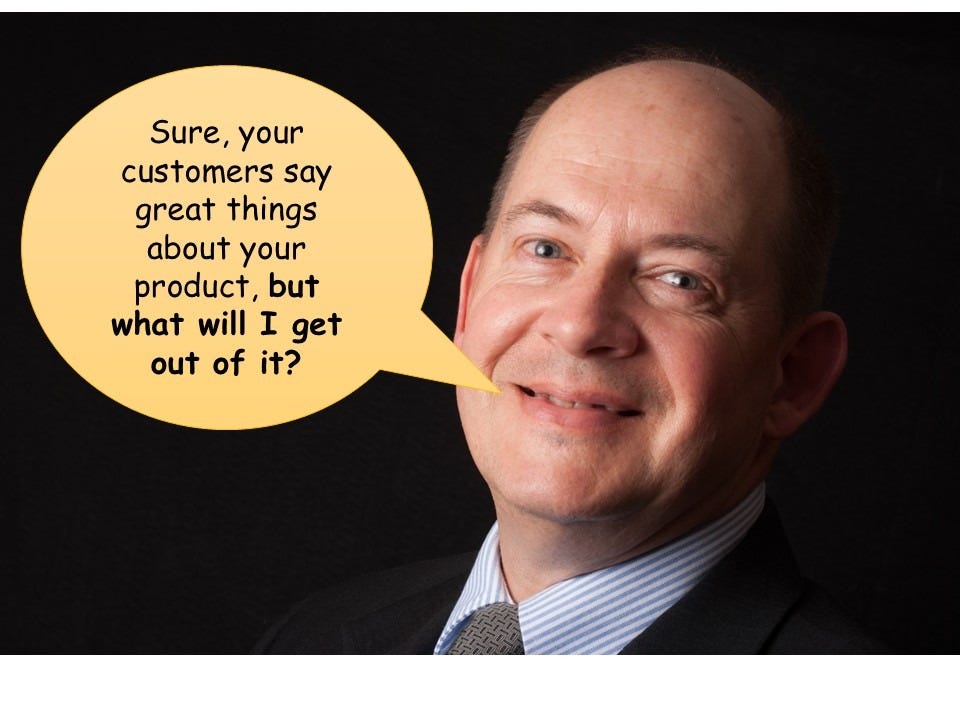
But even in the best of circumstances, a case study is less effective in the later stages of the sales cycle. A common customer pushback is “Sure your customers say great things about your product, but what will I get from it?” Actual mileage, as they say, may vary. You cannot rely on a case study to answer the customer’s executive team questions about expected payback.
This is a job for a business case, particularly a form of business case called a value story. A value story directly addresses the payback questions. They are highly credible because they are written with direct input of the customer themselves. It’s a replicable process that never gets outdated. To read about my best ever example (in terms of client impact) see:

Sales managers can overcome their team’s hesitation to adopt value selling through effective onboarding and value coaching. However, better sales success is usually what wins them over.
Therefore, if I had to recommend one sales tool that can break the “no decision” impasse, it would be a business case/value story.